7 Best Ways to Degrease Oven Without Harsh Fumes

A roast dinner can leave more behind than washing-up. Fat spatters settle on the oven roof, fan cover, glass and shelves, then bake into a sticky brown layer each time the oven heats up. The best ways to degrease oven surfaces depend on how long that residue has been there - fresh grease can often be managed at home, while old carbon and heavily soiled parts need more time, care and specialist treatment.
The aim is not simply to make the oven look better. Removing grease can reduce cooking odours and smoke, help prevent residue transferring to food, and make it easier to spot spills before they become burnt-on deposits. A sensible routine also means you are less likely to face a full-day cleaning job just before guests arrive or at the end of a tenancy.
1. Clean fresh spills once the oven is cool
The easiest grease to remove is the grease that has not had repeated heat cycles. Once the oven is fully cool, wipe visible splashes from the base, sides and inside of the door with a soft cloth, warm water and a little washing-up liquid. Finish with a clean damp cloth so that no detergent film remains.
Avoid pouring water directly into the oven or soaking areas around the fan, heating elements, ignition points or vents. A lightly dampened cloth gives you control and is usually all that is needed for recent spills.
This small job is particularly worthwhile after cooking fatty meats, roasting vegetables in oil or using the grill. It takes minutes, but stops grease becoming the hardened, smoky coating that is far more difficult to shift later.
2. Use bicarbonate of soda for light-to-medium grease
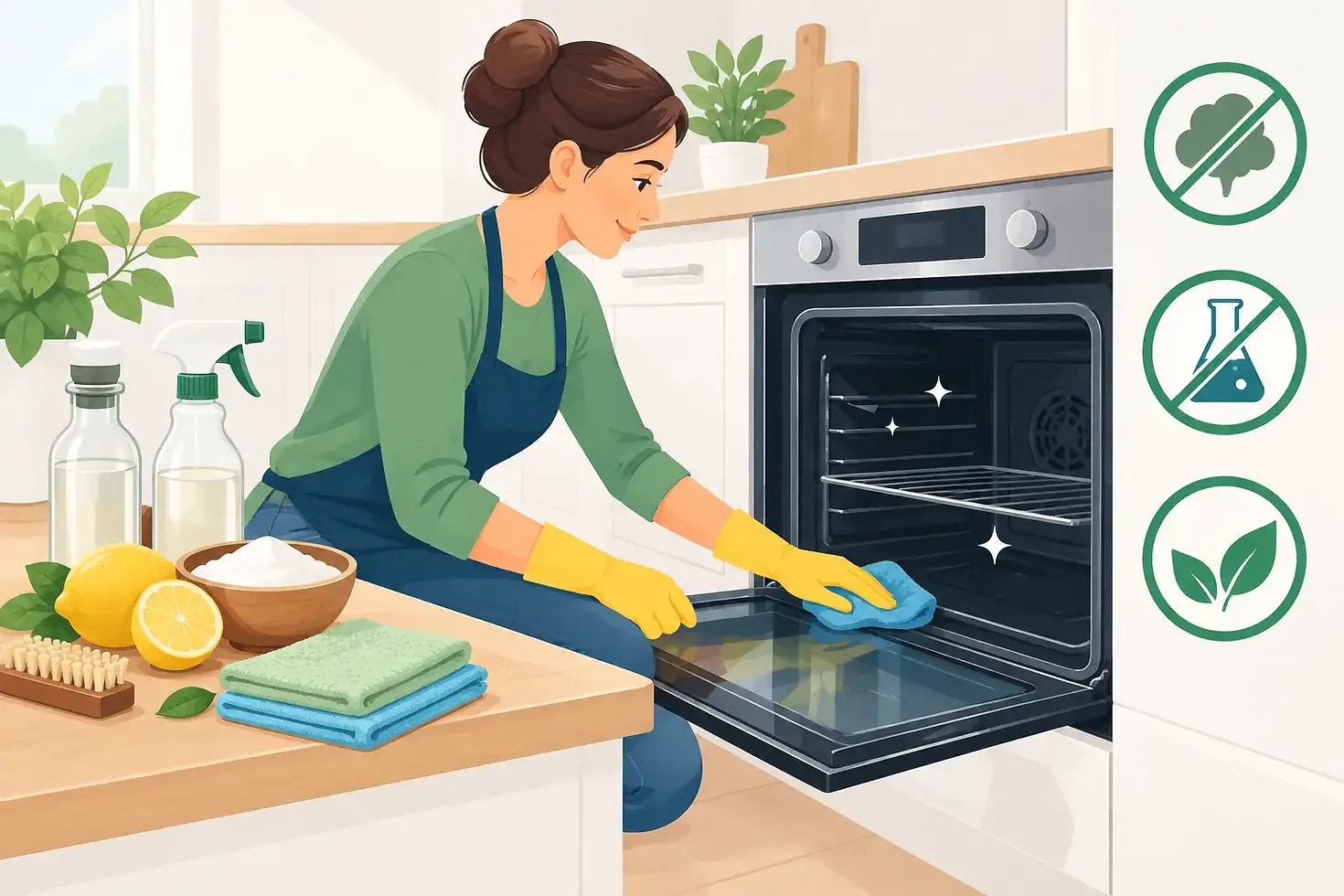
For a generally greasy oven interior, bicarbonate of soda is a gentler household option than many strong oven sprays. Make a thick paste with bicarbonate of soda and a small amount of water, then spread it over cool, greasy surfaces with a cloth or soft sponge. Keep it away from heating elements, fans, openings and electrical controls.
Leave the paste to work for several hours, or overnight if the grease is more established. Wipe it away with a damp cloth and repeat where necessary. A plastic scraper can help lift softened residue from the oven floor, but do not use anything sharp that could scratch enamel or damage a coating.
Bicarbonate paste is useful for maintenance, but it has limits. It may soften greasy films, yet it will not always remove thick black carbon around the back of the oven, on the roof, or in awkward corners. Trying to force the result with aggressive scouring can leave scratches that make future grime cling more readily.
3. Give shelves and grill pans their own treatment
Shelves, side racks and grill pans collect some of the heaviest residue because drips land directly on them. If they are only lightly soiled, soak them in hot water with washing-up liquid before cleaning with a non-abrasive pad. Protect the bath or sink with an old towel first, as metal parts can mark enamel surfaces.
For very greasy racks, ordinary soaking often becomes a frustrating cycle of scrubbing, rinsing and starting again. This is where professional cleaning has a clear advantage. At Revive Oven Cleaning, detachable components are removed and treated in a heated dip tank in the custom-built van. The controlled treatment breaks down heavy grease, carbon and burnt-on residue before the parts are carefully cleaned and returned.
That approach is especially useful when shelves feel tacky, grill pans are blackened, or the side supports have residue in joints that are difficult to reach by hand. It also keeps the mess outside the kitchen rather than transferring greasy water through the house.
4. Degrease the door carefully, not aggressively
A cloudy oven door makes even a clean kitchen feel neglected. Start with the inside glass, using a soft cloth and a suitable non-caustic degreaser or bicarbonate paste for light marks. Work patiently around the edges, then wipe clean with a fresh damp cloth and dry it to avoid streaks.
The area between glass panels is different. Grease and condensation can sometimes work their way inside the door, particularly over years of use. Do not force hinges, remove screws at random or prise apart a door without knowing how it is designed. Oven doors are heavy, hinges can be under tension, and incorrect reassembly may affect how safely the door closes.
Where suitable, a professional can dismantle the door carefully to clean between the glass panels, then reassemble it and check the fit. Not every door is designed to be taken apart in the same way, so this is a job where the right method matters more than a quick fix.
5. Do not rely on harsh chemicals as the default
Powerful caustic oven cleaners can appear to offer the quickest answer, but they bring trade-offs. Strong fumes can be unpleasant in a busy home, residues need very thorough removal, and careless use can damage surfaces or irritate skin and eyes. They are also a poor fit for many households with children, pets or limited kitchen ventilation.
If you do use a commercial product, follow its instructions exactly, wear suitable gloves, ventilate the room and never mix it with another cleaner. In particular, do not combine products in the hope of making them work faster. Chemical reactions can create harmful fumes and may damage the appliance.
A safer route is regular gentle maintenance combined with a professional deep clean when grease has passed the point where home cleaning is practical. Revive uses non-caustic, non-toxic, low-odour and fume-free products, so the oven can be ready to use immediately after the appointment. The result should not come with a lingering chemical smell in the kitchen.
6. Know when a deep clean will save time
There is a point where another hour of scrubbing is no longer good value. A professional clean is worth considering when the oven smokes during cooking, produces persistent odours, has blackened racks and grill pans, or has grease around the fan cover, seals and door edges. It is also a practical choice before moving home, handing back a rental property or preparing a property for new tenants.
A thorough appointment is more than a wipe-over. The oven is inspected, the workspace is protected, removable components are taken out for treatment, and internal surfaces are hand-cleaned with attention to hard-to-reach areas. After reassembly, the appliance is checked so you can see the difference where it matters: cleaner glass, brighter shelves, reduced residue and a fresher-looking oven.
For landlords and letting agents across West Sussex, East Sussex and Surrey, this process can support a dependable turnaround without asking a tenant, cleaner or contractor to spend hours battling old grease with harsh products. For homeowners, it simply puts a difficult household task in experienced hands.
7. Keep the result for longer
After a deep clean, a few habits make a noticeable difference. Use a roasting tray that is large enough to catch drips, wipe splashes once the oven has cooled, and clean the door glass little and often rather than waiting for it to turn brown. If you use the grill regularly, check the grill pan after each use.
Aim for a quick wipe after messy cooking and a more considered clean every few months, depending on how often the oven is used. A family oven used most evenings will need attention sooner than one used mainly at weekends. There is no single schedule that suits every household.
If your oven has reached the stage where grease is baked on, smoke appears when it heats, or the glass is obscured by grime, choosing a safe, fume-free professional service can be the calmer option. A clean oven is easier to cook with, easier to maintain and one less demanding job on the household list.


